> from_experience
What staying taught us
We don't just build and hand off — we run these systems. That changes how we think about every project.
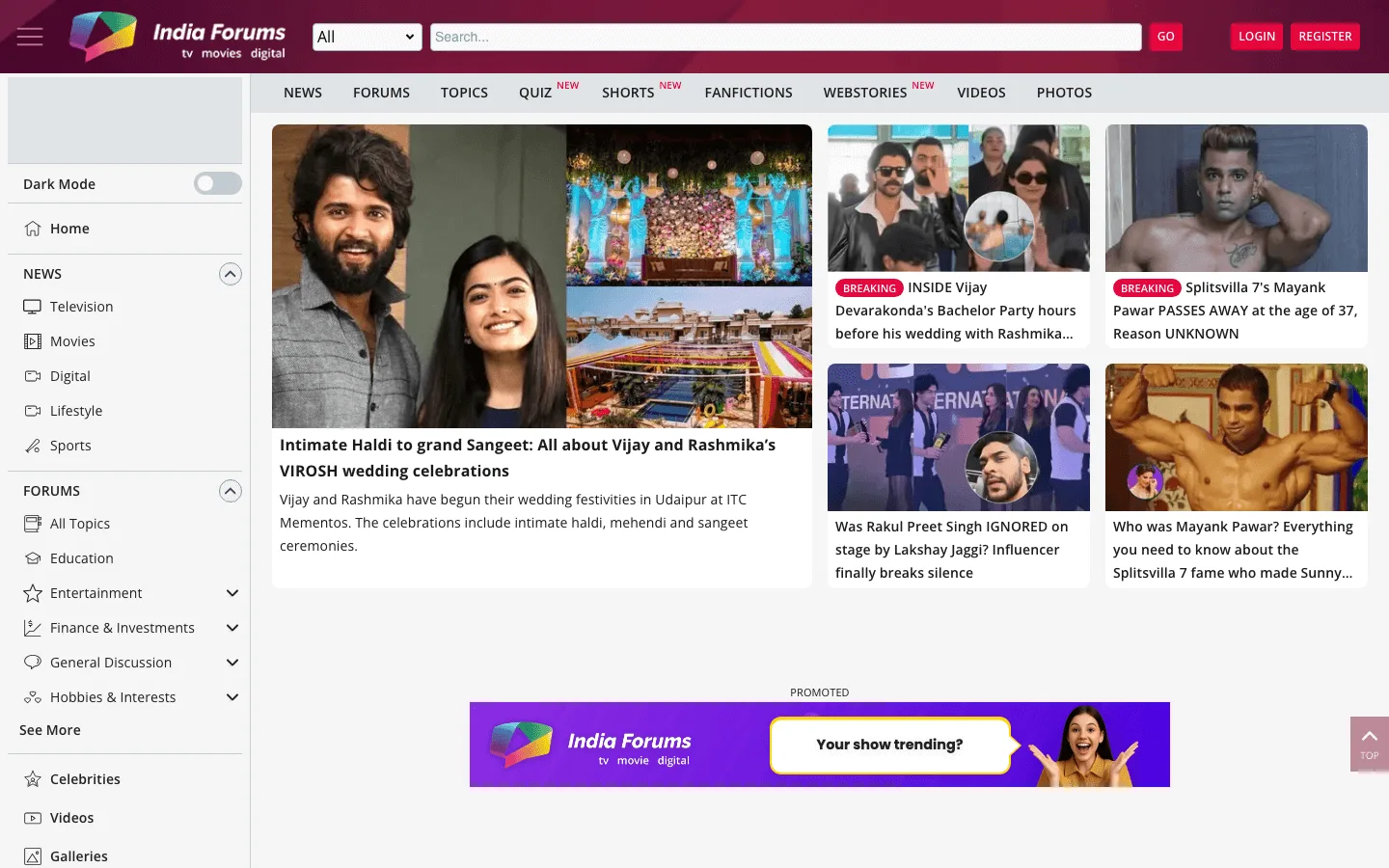
IndiaForums.com
One of India's largest entertainment community portals — forums, news, TV show coverage, celebrity rankings, fan fiction, and real-time discussions. We built it and we've been running it for over 15 years.
What it does
IndiaForums covers Indian television, movies, and OTT content — with dedicated forums for every major show on Star Plus, Zee TV, Colors, and Sony. Users post discussions, write fan fiction, vote in celebrity rankings, share photo galleries, and follow real-time show updates. Thousands of concurrent users generating content around the clock.
What made it hard
Traffic doesn't arrive evenly. When a popular show airs — Anupamaa's season finale, a surprise elimination, TRP week results — the load spikes massively in minutes. Thousands of users flood the same forum threads simultaneously. On top of that, the platform has 15+ years of community history — threads, user profiles, content archives — that all has to stay fast and accessible while new features keep shipping.
What we did about it
We built every layer assuming spikes, not averages. Caching strategies tuned for the kind of content that goes viral in the Indian TV community. Queue-based processing for user-generated content so a flood of forum posts doesn't choke the rest of the platform. The system handles traffic surges without anyone noticing — and degrades gracefully when a dependent service is slow instead of taking the whole site down.
What it taught us
Running a platform with real users for over a decade teaches you things no spec or test suite ever will. Users find edge cases within hours of a new feature. Traffic patterns follow TV schedules, not your capacity plan. Every system we build now is designed for the session that breaks assumptions — not the one that follows the happy path.
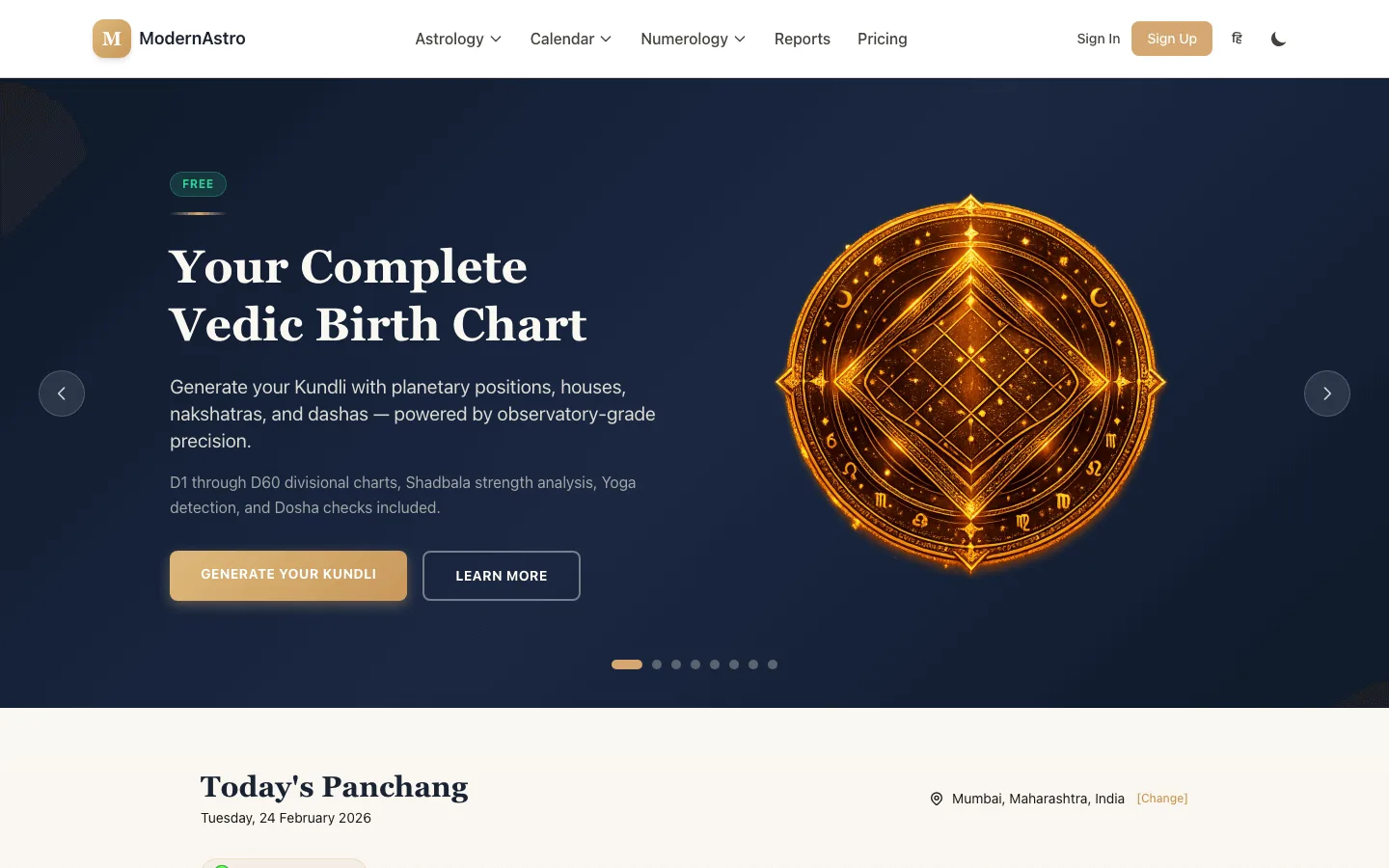
ModernAstro.com
An AI-powered astrology platform that combines Vedic and Western astrological systems — birth chart analysis, real-time transit predictions, and personalized daily guidance. The calculation engine behind it is where the real complexity lives.
What it does
ModernAstro generates birth charts, calculates planetary transits in real-time, and produces personalized astrological insights powered by AI. Under the surface, it's a calculation engine processing multiple astrological systems — Vedic dashas, Western aspects, house systems, planetary dignities — each with their own rules, and each producing results that feed into the next.
What made it hard
Astrological calculation isn't simple math — it's layered rule systems that interact. A Vedic dasha period depends on the Moon's position at birth, which depends on the ayanamsa correction used, which varies by school of thought. Change one parameter and the entire chart shifts. But a reading generated last month can't retroactively change because you updated a calculation method. You need both: the ability to evolve the engine and the guarantee that past results stay intact.
What we did about it
We separated the calculation engine from the presentation layer entirely. Every chart generated is stamped with the exact ruleset and parameters used. When we add a new house system or refine a transit algorithm, existing charts and readings remain untouched. New logic layers in without rebuilding what's already working. The engine has been evolving continuously without a single full rebuild.
What it taught us
Some software has to evolve for years without starting over. When the domain logic is this deep and this layered, you have to build for change from day one — versioned calculations, clean boundaries between what the system computes and what it shows. We carry this architecture into everything we build where business rules are complex and expected to change.
CyberaxHR
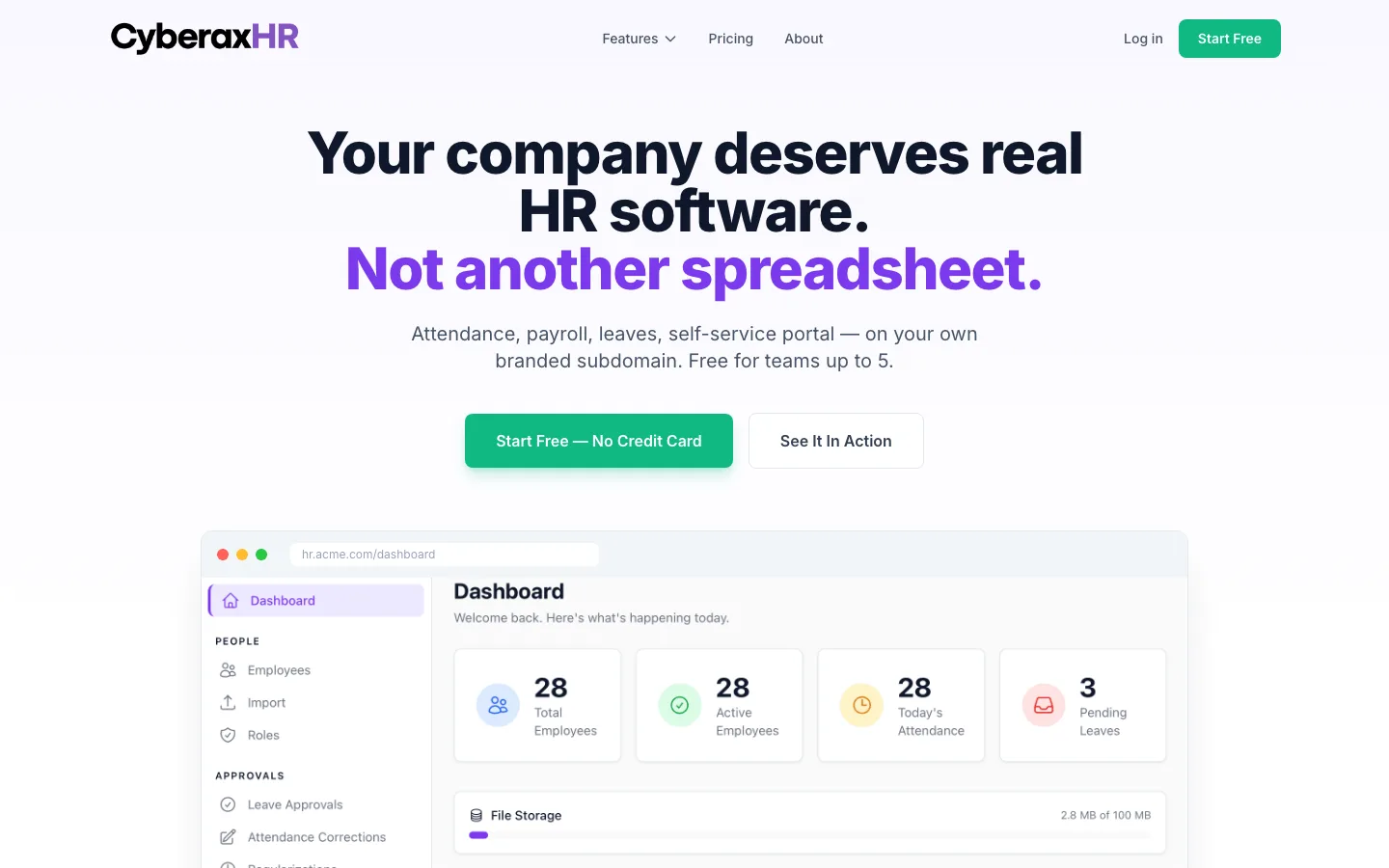
Our own HR management platform — attendance, leave, payroll, employee records, and daily team operations. Built for the kind of reliability where 'the system is down' means people can't do their jobs.
What it does
CyberaxHR handles the full employee lifecycle — attendance tracking, leave management, payroll processing, employee records, team coordination, and reporting. It's the first thing the team opens every morning and the system every workflow runs through. Timesheets, approvals, pay slips, compliance reports — all in one place.
What made it hard
When the HR system has a problem, people can't mark attendance, managers can't approve leave, payroll can't run on time. It's not "inconvenient" — actual work stops. And HR logic is deceptively complex: leave policies that vary by employee type, payroll calculations that depend on attendance data that depends on shift rules that change by department. One broken link and the whole chain stalls.
What we did about it
We designed for graceful degradation at every level. If payroll processing is slow, attendance and leave still work. If one integration fails, the rest of the workflow continues. Partial failures don't cascade into full outages. We also built every calculation to be auditable — every pay slip can be traced back to the exact attendance records, leave balances, and policy rules that produced it.
What it taught us
Business software that people depend on daily has to prioritize continuity. A system that's 95% functional is infinitely better than one that's 100% down. And when the system handles people's pay and leave balances, every calculation has to be traceable. We build every internal tool now with the same expectation: if it runs daily, it has to be resilient and auditable by default.